

Choosing the best fabric for DTF printing is one of the biggest factors affecting print quality. Cotton, polyester, and blended fabrics all react differently to heat, ink absorption, and durability.
In this DTF fabric guide, we’ll explain how each material prints so you can pick the right shirt for your custom apparel.
1. Cotton: The Classic Go-To
DTF Performance:
- Cotton has a porous, natural surface that allows DTF inks to adhere evenly, producing vibrant and detailed prints.
- Works with virtually all DTF color palettes, from bright primary colors to complex gradients.
- Slight shrinkage can occur after washing, so pre-shrunk options are recommended.
Analysis for Customers:
| Factor | Cotton |
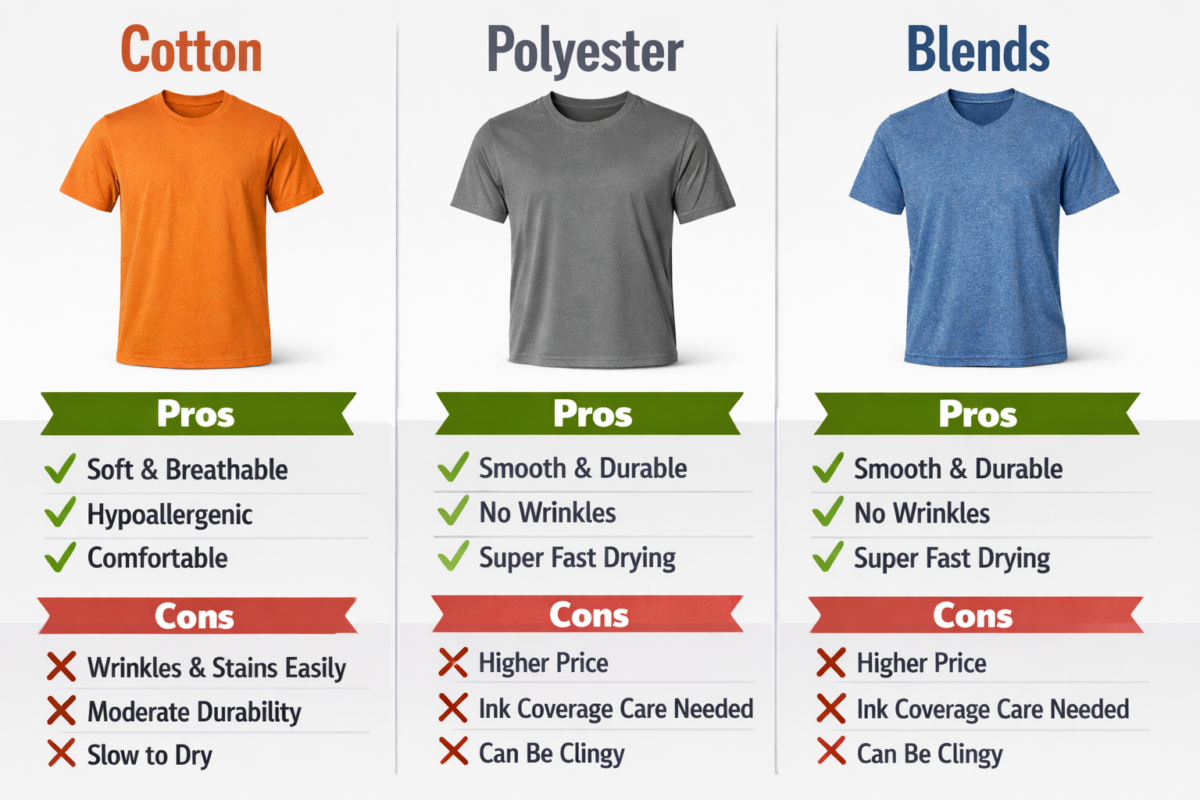
| Quality / Durability | Soft, breathable, hypoallergenic; may wrinkle and stain easily; moderate durability |
| Cost | Usually mid-range; premium cotton costs more |
| Best Use | Family events, personalized gifts, company swag |
| Design Suitability | Excellent for intricate designs, vibrant colors, gradients |
Key Takeaway:
Choose cotton if your design is color-heavy or detailed and your priority is softness and comfort. Ideal for casual wear or gifts where visual impact matters.
2. Polyester: Performance and Longevity
DTF Performance:
- Polyester is smooth and synthetic, which can make colors appear slightly less vibrant than cotton.
- Requires careful heat settings during DTF to avoid warping or scorching, but results are durable and long-lasting.
- Excellent for moisture-wicking apparel and sportswear.
Analysis for Customers:
| Factor | Polyester |
| Quality / Durability | Very durable, less shrinking, fading, and wrinkles; less breathable |
| Cost | Slightly higher than cotton in some premium brands; good for performance wear |
| Best Use | Sports teams, performance apparel, outdoor promo items |
| Design Suitability | Works best for bold, simple graphics; detailed gradients may be muted |
Key Takeaway:
Polyester is perfect for activewear or durable merchandise where longevity matters more than ultra-vibrant, intricate prints.
3. Blends: The Balanced Option
DTF Performance:
- Blends combine the softness of cotton with the durability of polyester.
- Popular blends include 50/50 cotton-poly, CVC (60/40), and tri-blends (cotton/poly/rayon).
- DTF prints adhere well, colors are reasonably vibrant, and shrinkage/warping is reduced.
Analysis for Customers:
| Factor | Blends |
| Quality / Durability | Balanced: softer than polyester, more durable than cotton; minimal shrinkage |
| Cost | Slightly higher than cotton; tri-blends tend to be the priciest |
| Best Use | Corporate apparel, event merch, versatile everyday wear |
| Design Suitability | Good for mixed designs: logos, text, moderate gradients; tri-blends softer but require careful ink coverage |
Key Takeaway:
According to this DTF fabric guide, blends offer balanced performance. They are a safe middle ground for most custom apparel: comfortable, durable, and suitable for varied designs.
How to Choose the Right Fabric for Your DTF Project
When deciding, consider four key factors:
Design Complexity:
- Detailed, vibrant, or gradient-heavy → Cotton
- Bold, simple graphics → Polyester
- Mixed graphics, logos + text → Blends
Purpose / Use:
- Casual gifts and family events → Cotton
- Sports, performance, or outdoor promo → Polyester
- Corporate swag or versatile apparel → Blends
Cost Considerations:
- Budget-sensitive orders → Standard cotton or 50/50 blends
- Premium, performance-focused → High-end polyester or tri-blends
Durability & Wearer Comfort:
- Softness and breathability → Cotton or blends
- Longevity and moisture-wicking → Polyester
Conclusion
There’s no one-size-fits-all answer when it comes to DTF custom apparel. By understanding how cotton, polyester, and blends behave during printing—and weighing factors like design, cost, purpose, and comfort—you can confidently select the fabric that works best for your project.
Use this DTF fabric guide before choosing blank apparel, you can explore our custom T-shirt printing options here.
https://promoharvest.ca/product-category/custom-apparel/custom-t-shirts/
Tip: Always order a sample if possible, especially for detailed DTF designs or performance fabrics, to see how your chosen design interacts with the material.
